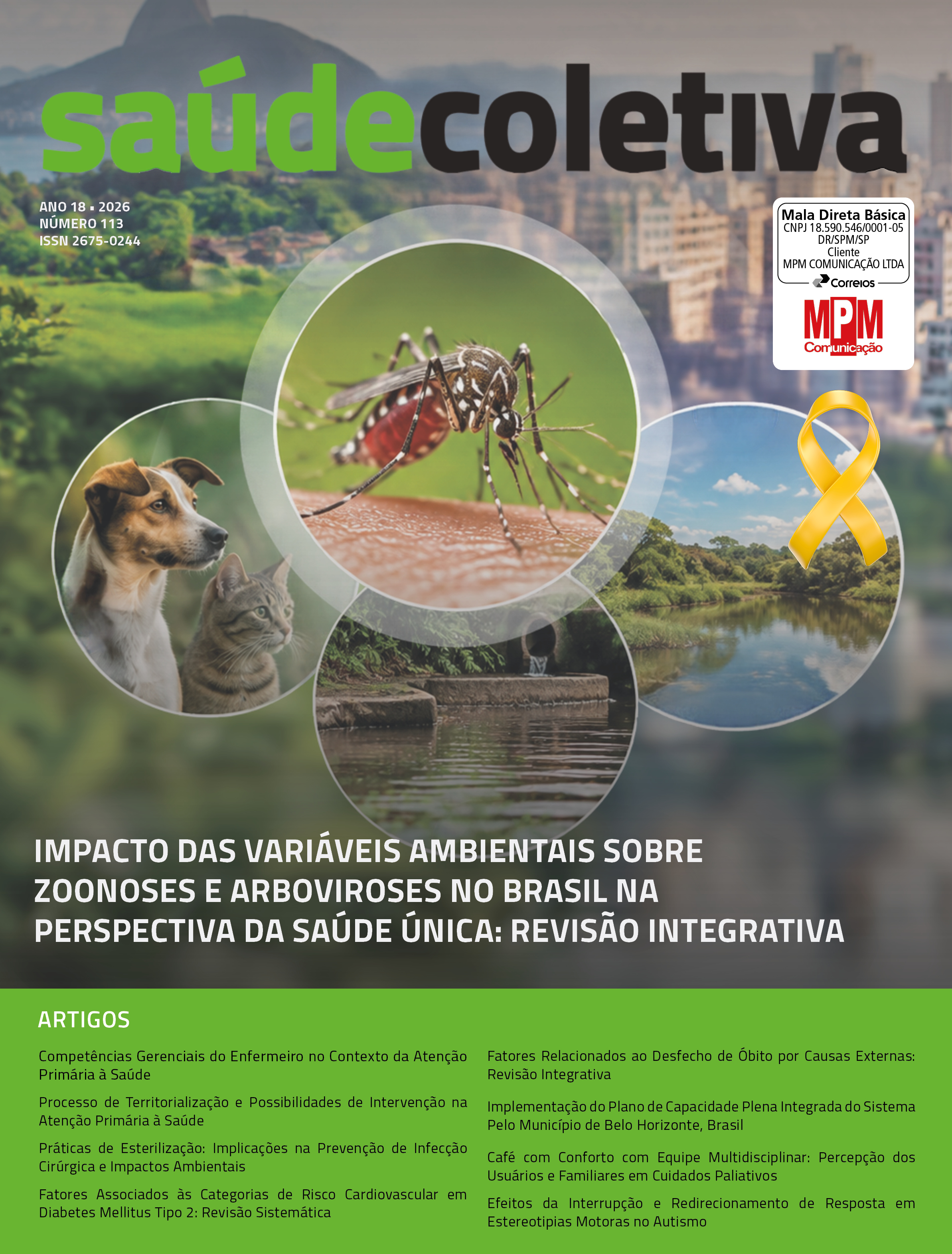
Impacto das Variáveis Ambientais Sobre Zoonoses e Arboviroses no Brasil na Perspectiva da Saúde Única: Revisão Integrativa
DOI:
https://doi.org/10.36489/saudecoletiva.2026v18i113p21030-21049Keywords:
Arboviroses, Conservação dos Recursos Naturais, Saúde única, Mudanças climáticas, ZoonosesAbstract
Objective: To analyze and synthesize evidence from the scientific literature regarding the relationship between changes in land use and vegetation cover and the occurrence of zoonoses and arboviral diseases. Method: This is an integrative literature review using the PubMed, BVS, and SciELO databases. Twenty-two studies in English and Portuguese were included. Results: Most studies were conducted in the Brazilian Amazon; the primary diseases identified were leishmaniasis, malaria, and arboviral diseases, associated with factors such as deforestation, loss of vegetation cover, land-use changes, urbanization, agricultural expansion, and climate change. Environmental changes foster vector proliferation, intensify human-animal contact, and increase the risk of zoonosis transmission. Conclusion: Environmental changes associated with rising temperatures and population density heighten epidemiological risks, underscoring the importance of policies for environmental conservation, urban planning, and sustainable natural resource management in promoting One Health.